The Case That Defined the Indian Constitution
Background
The case was filed by Kesavananda Bharati, challenging Kerala’s land reform laws that affected property owned by religious institutions.
At the same time, Parliament had introduced amendments to expand its power under Article 368, raising concerns about unlimited constitutional changes.
Key Issue
Can Parliament amend any part of the Constitution, including Fundamental Rights, without limitation?
A 13-judge bench (7:6 majority) held:
- Parliament can amend the Constitution But cannot alter its Basic Structure
Basic Structure Doctrine
Though not exhaustively defined, it includes:
- Rule of law
- Judicial review
- Supremacy of the Constitution
- Separation of powers
- Democracy and secularism
Significance
- Prevents misuse of amendment powers
- Protects core constitutional values
- Strengthens judicial review
The doctrine was later applied in cases like Minerva Mills v. Union of India.
Conclusion
The Kesavananda Bharati case ensures that while the Constitution can evolve, its core identity remains intact—making it a cornerstone of Indian democracy.
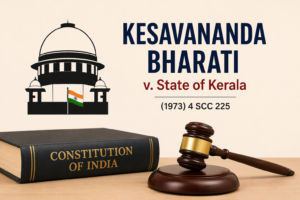
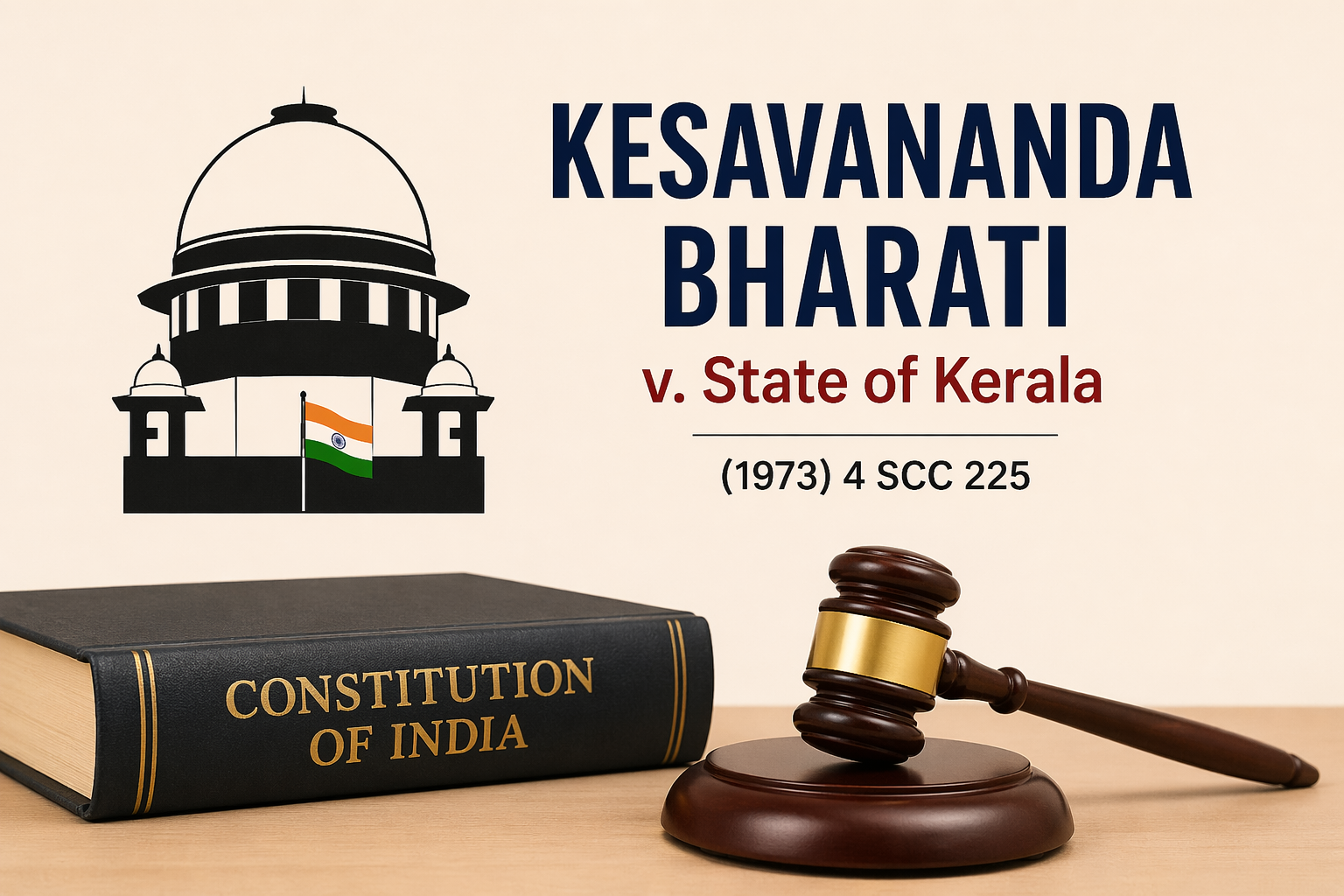
Citation – Kesavananda Bharati v. State of Kerala, (1973) 4 SCC 225 (SC)