| Summary Bonkers Corner began in 2020 with founder Shubham Gupta doing the basics right — creating simple designs, testing them as mockups, and using Instagram ads to generate real demand before even producing inventory. What followed wasn’t aggressive expansion, but disciplined execution. The brand stayed consistent with its core playbook: focus on everyday essentials, keep the team lean, and maintain complete control by running operations in-house. Today, Bonkers has scaled that simple approach into a massive unisex streetwear portfolio of over 12,000 SKUs, spanning oversized apparel, gym wear, joggers, hoodies, and sweatshirts — proving that clarity beats complexity in building a fashion brand. |

The Anti-Startup Story Nobody Talks About
In India’s startup ecosystem, there’s a predictable script:
Raise funding → burn cash → chase growth → worry about profits later.
Bonkers Corner did the exact opposite.
No funding. No hype. No big launch.
Just Instagram, instincts, and an understanding of what Gen Z actually wanted to wear.
And somehow, that was enough to build a ₹195 crore brand.
It Didn’t Start As A Business — It Started As A Bet
Back in 2020, when most people were figuring out lockdown survival, Shubham Gupta was testing T-shirt designs on Instagram.
No warehouse.
No inventory.
No guarantee anyone would buy.
Here’s the interesting part — he didn’t even start with products.
He started with mockups.
Run ads → get orders → then produce.
This isn’t just smart. It’s brutally efficient.
Opinion:
Most D2C founders in India overestimate demand and overinvest early.
Bonkers did the opposite — it earned the right to scale.
While startups were busy raising rounds, Bonkers was doing something unpopular:
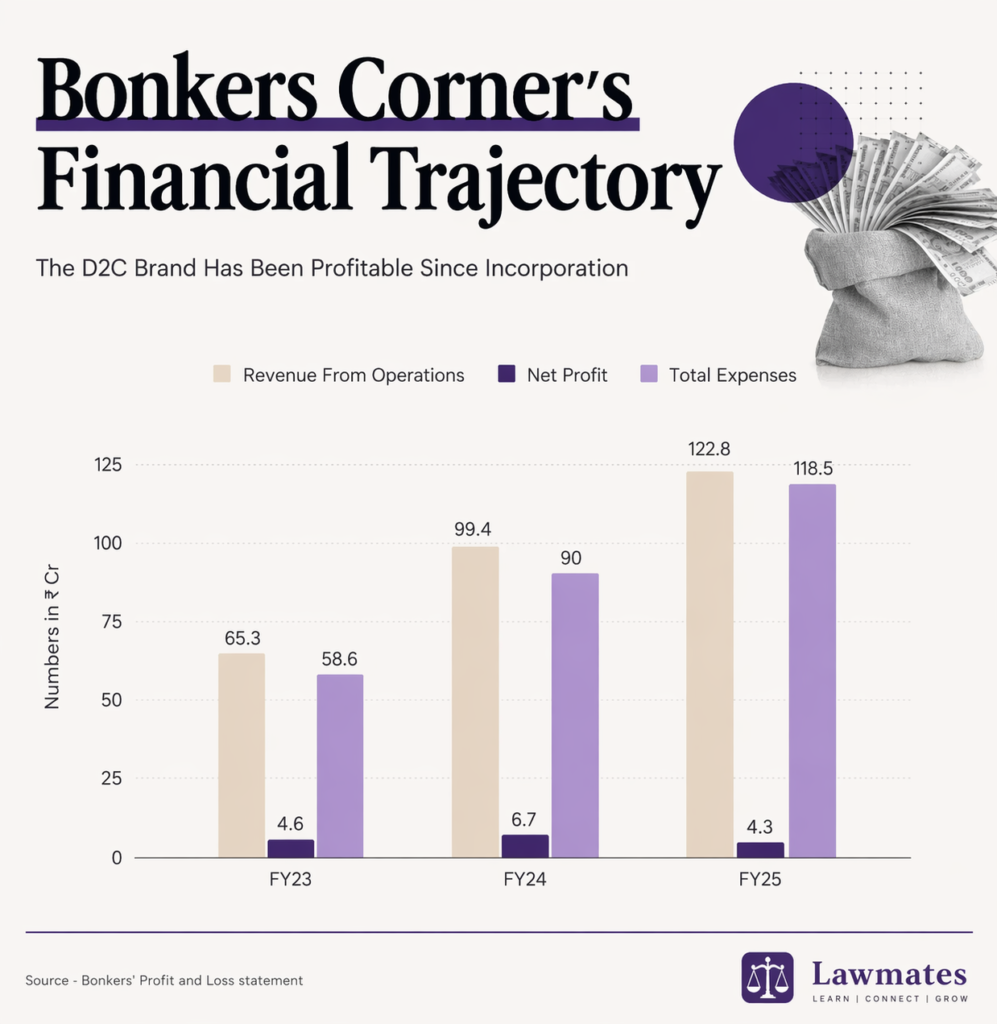
Making money.
- No luxury office
- No unnecessary hiring
- No “growth at any cost” mindset
Every rupee spent had to justify itself.
Opinion:
Bootstrapping forces discipline. Funding often hides inefficiency.
Bonkers didn’t just survive without funding — it became stronger because of it.
Owning Manufacturing = Owning The Game
Most D2C brands in India:
👉 Outsource everything
Bonkers:
👉 Built in-house manufacturing
That changes everything:
- Faster launches
- Better margins
- Quality control
Opinion:
This is the real moat.
Anyone can run ads.
Anyone can hire influencers.
But not everyone can control production at scale.
Influencer Marketing — But Not The Dumb Version

Yes, Bonkers used influencers heavily.
But here’s the difference:
It wasn’t vanity marketing.
It was performance-driven.
Early on, they spent nearly half their budget on influencers — not for “branding”, but for conversion.
Opinion:
Most brands treat influencers like billboards.
Bonkers treated them like a sales channel.
That mindset shift is everything.
Offline Stores: The Unexpected Growth Engine
In 2023, Bonkers went offline.
At first glance, it sounds counterintuitive.
Why would a digital-first brand go physical?
Because:
👉 People still want to touch fashion.
Now:
- ~40% revenue comes from offline
- Stores are becoming growth drivers
Opinion:
The future isn’t online vs offline.
It’s integration.
Bonkers understood this earlier than most D2C players.
Funding Came Late — Exactly When It Should

Bonkers didn’t raise money to survive.
It raised money to scale.
That’s a huge difference.
By the time funding came:
- Business model was proven
- Revenue was strong
- Profitability existed
Opinion:
This is how funding is supposed to work.
Not as oxygen. But as fuel.
So What’s The Real Lesson Here?
Bonkers Corner isn’t just a success story.
It’s a quiet critique of how most startups operate.
What it got right:
- Validated demand before building
- Entered at the right time
- Simplified operations (unisex, limited waste)
- Focused on profitability early
- Controlled production
- Used marketing as a tool, not noise