
The Supreme Court’s Same Sex Marriage Verdict and Its Continuing Impact

In October 2023, five judges of the Supreme Court of India sat across a question that had been building for years, both inside courtrooms and outside them: Can the law recognise the right of same sex couples to marry? The answer, delivered in a split but decisive ruling in Supriyo v. Union of India, It was not what many had hoped for. The Court declined to legalise same sex marriage. And yet, to read the judgment merely as a “no” would be to miss its deeper, more complicated legacy. A Case About Marriage – That Became About Citizenship (Supriyo v. Union of India) The petitions before the Court were, on paper, straightforward. Couples from the LGBTQ+ community sought recognition of their relationships under existing laws like the Special Marriage Act. They argued that exclusion from marriage was not just symbolic, it denied them tangible rights: But as arguments unfolded, the case expanded into something larger: What does equality mean in a constitutional democracy? And more pointedly, who gets to define the boundaries of a family? The Court Draws a Constitutional Line The Constitution, the bench agreed, protects dignity, autonomy and the right to form relationships. In fact, this position had already been laid down in earlier rulings like the decriminalisation of homosexuality. Yet, when it came to marriage, the Court stopped short. The majority held that: In essence, the judges acknowledged the legitimacy of queer relationships, but refused to extend to them the institution of marriage. It was a careful distinction and also a controversial one. Recognition Without Full Rights Where the judgment becomes more nuanced is in what it did recognise. The Court affirmed that: There was also a direction to the government to consider forming a committee to examine the rights and benefits that could be extended to same sex couples. But crucially, on issues like adoption rights, the bench was divided, and the final outcome offered little immediate change. A Bench That Spoke in Different Voices What made the judgment particularly striking was its internal disagreement. While the majority leaned toward judicial restraint, minority opinions were more expansive. They argued that constitutional morality must evolve with society and that denying marriage rights perpetuates structural inequality. This divergence did not alter the final outcome — but it revealed a judiciary grappling with the limits of its own power. Why the Court Stepped Back To understand the ruling, one must look beyond rights discourse and into institutional boundaries. The Court appeared cautious about: In doing so, the judgment reflects a broader philosophy: that not every progressive outcome can or should come from the judiciary. The Real-World Impact: A Legal Vacuum For same sex couples, the consequences remain immediate and tangible. Without legal recognition of marriage: In effect, relationships may be socially visible, even constitutionally acknowledged, but remain legally incomplete. The Conversation Moves Beyond the Courtroom If the judgment closed one door, it opened several others. Since the ruling: The Court, in a way, shifted the responsibility from judges to lawmakers, from courtrooms to Parliament. A Judgment That Will Age With Society History suggests that transformative rights often arrive in stages. What appears as judicial hesitation today may, in time, be seen as part of a longer constitutional journey. The same sex marriage verdict does not settle the issue. It merely defines the present boundary. And boundaries, in a living Constitution, are rarely permanent. Case Citation Case: Supriyo v. Union of IndiaCourt: Supreme Court of IndiaDate of Judgment: 17 October 2023Case Type: Writ Petition (Civil) No. 1011 of 2022 Significance: A landmark moment not for what it granted, but for how it reframed the debate on equality, dignity, and the role of courts in social change.
Aye Finance Reports Strong Q4 FY26 Growth, Profit More Than Doubles
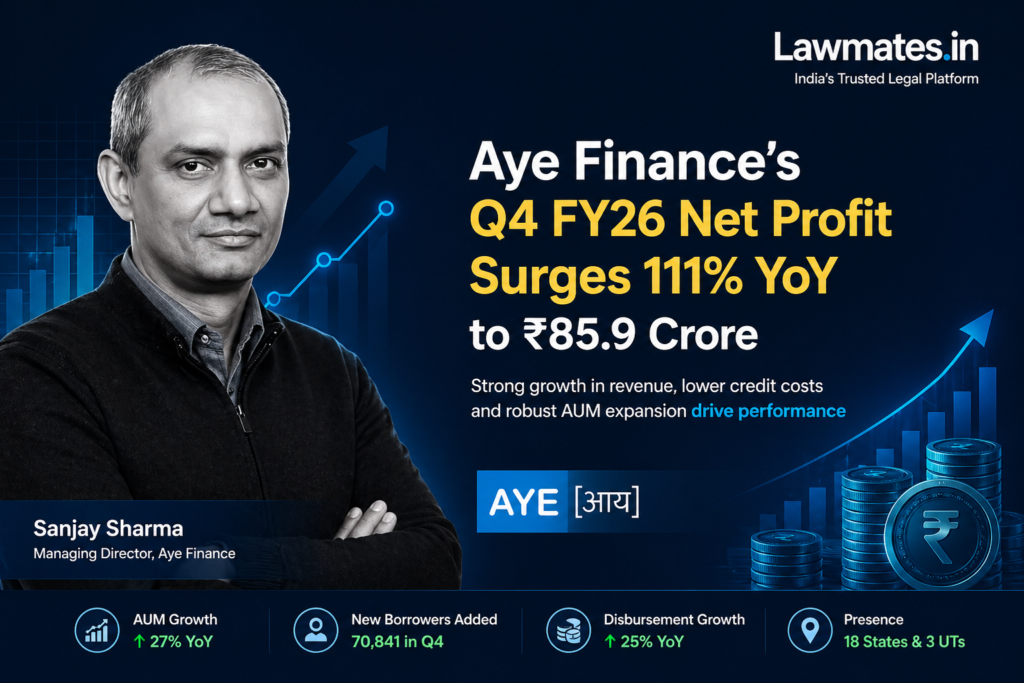
Aye Finance, one of India’s leading lenders focused on micro, small, and medium enterprises (MSMEs), delivered an impressive financial performance in the fourth quarter of FY26. The non-banking financial company (NBFC) reported a sharp rise in profitability, supported by strong loan growth, improved asset quality, and disciplined cost management. Profit Jumps Over 100% in Q4 Aye Finance posted a net profit of ₹85.9 crore in Q4 FY26, marking a remarkable 111% increase from ₹40.7 crore in the corresponding quarter last year. On a sequential basis, profit also more than doubled, rising 102% from ₹42.6 crore in Q3 FY26. This significant jump reflects the company’s ability to scale efficiently while maintaining healthy margins. It also highlights the growing demand for formal credit among underserved micro-enterprises across India. Revenue Growth Driven by Strong Core Operations Operating revenue for the quarter rose 29% year-on-year to ₹528.4 crore, compared to the same period last year. On a quarter-on-quarter basis, revenue increased 19%, underlining sustained business momentum. A major contributor to this growth was interest income, which climbed 26% year-on-year to ₹440.2 crore. This indicates robust expansion in the company’s lending portfolio and continued traction in its MSME loan offerings. Additionally, net gains from fair value changes surged sixfold to ₹48 crore, providing a substantial boost to overall earnings. The company also recorded a gain of ₹20 crore from the derecognition of financial instruments, although this was 42% lower than the corresponding quarter in the previous year. Including other income of ₹16.8 crore, Aye Finance’s total income for Q4 FY26 stood at ₹545.3 crore. Improving Asset Quality and Lower Credit Costs One of the most encouraging aspects of Aye Finance’s performance was the continued improvement in asset quality. Total expenses rose 18% year-on-year to ₹434.4 crore, a relatively moderate increase compared to revenue growth. More importantly, the company reported a 186 basis point reduction in credit costs, bringing them down to 4.3% for the quarter. This improvement follows consistent declines over the previous five quarters and reflects stronger underwriting standards, better collections, and improved borrower quality. For an MSME-focused lender, effective credit risk management is critical. Aye Finance’s ability to reduce credit costs while expanding its loan book demonstrates operational maturity and resilience. Strong Full-Year FY26 Performance For the full financial year FY26, Aye Finance reported a profit after tax (PAT) of ₹193.6 crore, up 13% from ₹171.3 crore in FY25. Operating revenue for the year grew 24% year-on-year to ₹1,814.7 crore. This consistent annual growth underscores the company’s strong market positioning in India’s expanding MSME lending segment. Loan Book and Customer Base Continue to Expand Aye Finance’s assets under management (AUM) increased 27% year-on-year to ₹7,044 crore, reflecting healthy portfolio expansion. Quarterly disbursements also rose 25% compared to the same quarter last year. During the quarter, the company added 70,841 new borrowers, further strengthening its presence in the underserved MSME credit market. This customer acquisition momentum demonstrates the vast and growing demand for accessible financing solutions among small businesses. Founded in 2014, Aye Finance specializes in providing business loans to micro-enterprises across 18 states and three union territories. Its product portfolio includes small-ticket hypothecation loans with an average ticket size of ₹1.5 lakh, as well as mortgage-backed loans averaging ₹5 lakh. Market Responds Positively Investor sentiment remained upbeat following the earnings announcement. Shares of Aye Finance surged 13.15%, trading at ₹152.45 on the BSE at 2:20 PM IST. The sharp rise in the stock price reflects market confidence in the company’s growth strategy, improving profitability, and strengthening asset quality. Outlook Aye Finance’s Q4 FY26 results highlight the strength of its business model and its deep understanding of India’s underserved MSME sector. With improving credit metrics, rising disbursements, and a growing customer base, the company appears well-positioned for sustained growth. As formal credit penetration among micro-enterprises continues to expand, Aye Finance is likely to remain a key beneficiary of this long-term structural opportunity. Its latest results reinforce its position as a significant player in India’s MSME lending ecosystem.
5 Manufacturing Startups to Watch in India in 2026

Summary India’s manufacturing momentum is accelerating, driven by robust policy support, rising investments, and large-scale infrastructure expansion. In the second edition of 5 Manufacturing Startups to Watch, we spotlight emerging innovators shaping the future of hardware, robotics, aerospace, and electronics. These startups are addressing critical industrial challenges through breakthroughs in high-performance computing, embedded systems, UAVs, and industrial automation—building the foundation for India’s next manufacturing leap. India’s manufacturing sector is entering a defining phase. Backed by strong policy support, rising capital inflows, and large-scale infrastructure expansion, the country is laying the foundation for long-term industrial growth. From electronics and semiconductors to aerospace and robotics, the momentum is unmistakable. Government initiatives continue to reinforce this shift. The expansion of the Startup India Fund of Funds to include technology-led manufacturing ventures, along with the approval of 29 projects worth over ₹7,100 crore under the Electronics Component Manufacturing Scheme (ECMS), underscores India’s commitment to industrial innovation. Adding to this momentum is the recently approved ₹33,600 crore BHAVYA scheme, which aims to develop 100 plug-and-play industrial parks across the country. Combined with continued incentives for semiconductors, electronics, and critical supply chains, these measures reflect India’s broader ambition to strengthen domestic manufacturing and move up the global value chain. That said, the journey is not without challenges. Supply chain disruptions, geopolitical tensions, rising input costs, and labour shortages continue to test manufacturers across major industrial hubs. Yet, these short-term hurdles have not slowed the sector’s long-term trajectory. Instead, they have accelerated the need for domestic innovation. A new generation of startups is stepping in to address critical gaps in hardware, embedded systems, aerospace, robotics, and semiconductor design. These companies are not merely participating in India’s manufacturing growth story; they are actively shaping it. Here are five promising manufacturing startups that are driving innovation and deserve close attention in 2026. 1. Anmaya Technologies Founded in 2022 by Nandavara Jayaram Hariprasad and Shobhitha Ujire, Anmaya Technologies is building advanced FPGA-based system-on-module solutions for aerospace, defence, and high-performance computing applications. Its customised hardware powers mission-critical systems such as satellites, drone communication networks, and secure computing platforms. As India seeks greater self-reliance in defence and space technology, Anmaya is helping reduce dependence on imported FPGA solutions. The company is also expanding into adjacent areas such as anti-drone systems and signal intelligence, positioning itself as a key player in India’s strategic technology ecosystem. 2. Bacancy Systems Established in 2021 by Binal Patel, Krunal Patel, and Hardik Sheth, Bacancy Systems develops embedded hardware and software solutions for electric mobility, healthcare, and railway infrastructure. Its product portfolio includes EV charging controllers, battery management systems, motor controllers, and embedded IoT solutions. The company is also building advanced train control and management systems to support India’s railway modernisation efforts. With end-to-end capabilities spanning design, validation, and manufacturing, Bacancy is emerging as a full-stack embedded systems provider in sectors poised for rapid growth. 3. Maraal Aerospace Founded in 2023 by Vivek Kumar Pandey and incubated at IIT Kanpur, Maraal Aerospace is redefining drone endurance through solar-powered autonomous aerial systems. Its fixed-wing UAVs are capable of operating for 12 to 16 hours, making them ideal for intelligence, surveillance, reconnaissance, maritime monitoring, and environmental tracking. The company is also developing high-altitude pseudo-satellite platforms for long-duration missions. By leveraging solar energy, Maraal addresses one of the biggest limitations of conventional drones: limited flight time. 4. Pace Robotics Founded in 2020 by Ayushmoy Roy and Srinivas K Pai, Pace Robotics is transforming the construction industry through automation. Its flagship robot, Centa Painter, autonomously performs painting, puttying, and sanding tasks on walls and ceilings. Equipped with advanced sensors, the robot can self-align, identify openings, and execute finishing work with minimal human intervention. The solution significantly improves efficiency, reduces labour dependence, and lowers costs, making it a compelling innovation for India’s rapidly growing construction sector. 5. Silizium Circuits Founded in 2020 by Arun Ashok and Rijin John, Silizium Circuits is a fabless semiconductor company focused on high-value chip design and semiconductor intellectual property. The startup develops analogue, RF, and mixed-signal semiconductor solutions for wireless communication, satellite connectivity, navigation systems, and IoT applications. Its offerings include GNSS/NavIC front-end modules, 5G RF components, and satellite communication chipsets. With applications spanning telecom, electric vehicles, drones, defence, and industrial systems, Silizium is well positioned to benefit from India’s semiconductor ambitions. The Road Ahead India’s manufacturing ecosystem is evolving rapidly. The focus is no longer limited to scale; it is increasingly centred on innovation, localisation, and technological sophistication. Startups like Anmaya Technologies, Bacancy Systems, Maraal Aerospace, Pace Robotics, and Silizium Circuits represent the next wave of industrial transformation. By addressing critical gaps in strategic sectors, they are helping build a more resilient, self-reliant, and globally competitive manufacturing economy. As India strengthens its position as a global manufacturing hub, these emerging companies are likely to play a pivotal role in defining the future of industrial innovation.
Reliance Appoints Parminder Singh to Lead AI Venture
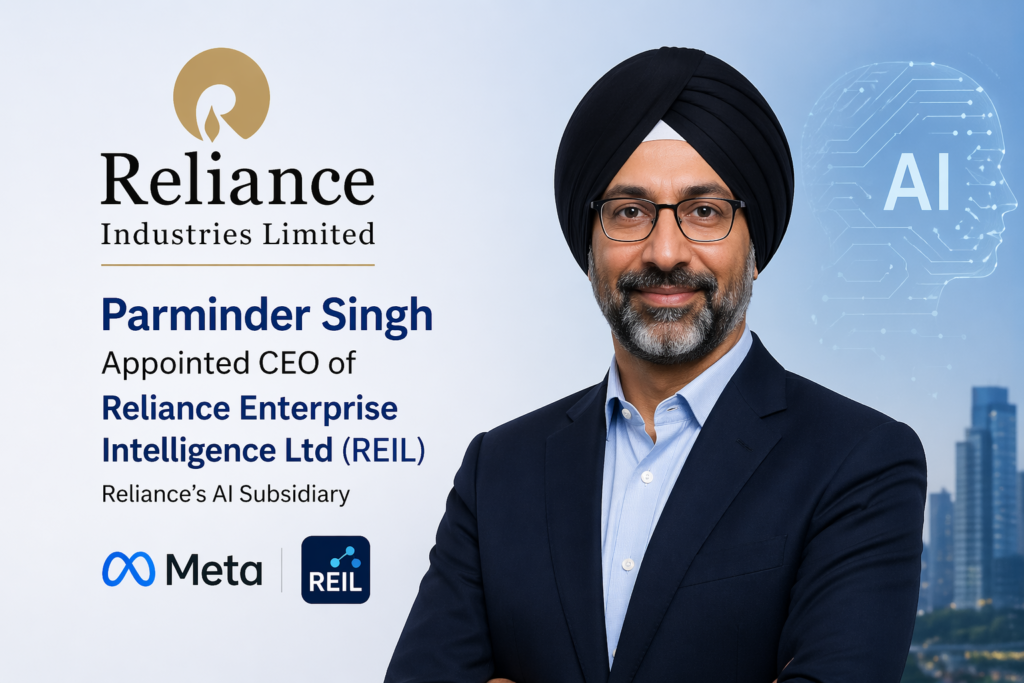
Summary Reliance Industries has appointed Parminder Singh as CEO of Reliance Enterprise Intelligence Ltd, its AI venture with Meta Platforms. With deep experience at Google, Apple, X, and IBM, Singh will lead Reliance’s enterprise AI strategy. The appointment underscores Reliance’s growing focus on artificial intelligence as India’s AI market expands rapidly, positioning the company to play a leading role in the country’s digital transformation. Reliance Industries has appointed former Google executive Parminder Singh as the Chief Executive Officer of Reliance Enterprise Intelligence Ltd (REIL), marking a significant step in the conglomerate’s ambitious push into artificial intelligence. The appointment takes immediate effect and signals Reliance’s intent to build a strong leadership foundation for its fast-growing AI business. With India rapidly emerging as a major AI market, the move places Reliance at the forefront of the country’s enterprise AI transformation. A Strategic Leadership Appointment Announcing the appointment, Akash Ambani described Singh as a leader uniquely positioned to guide Reliance’s AI ambitions. He highlighted Singh’s blend of global technology expertise, deep understanding of Asian markets, and proven executive leadership. Singh is expected to spearhead the development of a world-class team while shaping REIL’s long-term strategy. His appointment reflects Reliance’s broader vision of creating a robust AI ecosystem capable of serving enterprises across industries. In his first statement as CEO, Singh expressed confidence in the venture’s potential, particularly the strategic advantages created by the partnership between Reliance and Meta Platforms. He noted that the combined strengths of both companies offer a uniquely differentiated proposition in the enterprise AI space. Parminder Singh’s Global Technology Pedigree A graduate of Panjab University, Singh brings decades of leadership experience across some of the world’s most influential technology companies. His career spans senior roles at Google, Apple, X, and IBM. He has also held leadership positions in Asia’s media and technology sectors, including with Singapore-based Mediacorp. More recently, Singh co-founded ClayboxAI, a leadership advisory firm, and WeKamp, an AI-driven community platform. This diverse experience positions him well to lead a business operating at the intersection of technology, enterprise, and innovation. Reliance and Meta’s AI Joint Venture REIL was established following the strategic joint venture announced by Reliance and Meta in August 2025. The partnership was launched with an initial investment of approximately ₹855 crore, underscoring the scale of both companies’ commitment to enterprise AI. Under the ownership structure, Reliance holds a 70 percent stake through its investment of ₹596.6 crore, while Meta, through Facebook Overseas, owns the remaining 30 percent after investing ₹256.6 crore. The venture aims to combine Meta’s advanced AI capabilities, including its open-source Llama models, with Reliance’s vast digital infrastructure, computing capabilities, and enterprise distribution network. This synergy could position REIL as a key player in India’s rapidly expanding enterprise AI market. Why This Matters for India’s AI Ecosystem Reliance’s aggressive AI expansion aligns with India’s broader ambition to become a global leader in artificial intelligence. Earlier this year, Mukesh Ambani announced a staggering ₹10 lakh crore investment in AI and related technologies over the next seven years, beginning in 2026. This commitment reflects a larger shift among Indian conglomerates toward deep technology, particularly AI, as they seek to diversify beyond traditional sectors such as telecom, retail, and energy. The Indian government is also actively supporting this transformation. In the Union Budget 2026–27, Finance Minister Nirmala Sitharaman allocated ₹1,000 crore to the IndiaAI Mission to strengthen AI infrastructure and data centre capacity. At the same time, Indian AI innovators are making rapid progress. Companies such as Sarvam AI and initiatives like BharatGen are building large language models tailored to Indian languages and use cases, helping create a more self-reliant AI ecosystem. The Road Ahead India’s AI market is projected to exceed $126 billion by 2033, with the potential to contribute as much as $1.7 trillion to the country’s GDP by 2035. Against this backdrop, Reliance’s appointment of Parminder Singh is more than a leadership change—it is a strategic bet on the future of enterprise technology. With strong financial backing, a powerful partnership with Meta, and seasoned leadership at the helm, REIL is well positioned to shape the next phase of AI adoption in India. For Reliance, this is not merely an expansion into a new sector. It is a calculated move to become a defining force in India’s digital and technological future.
Is India Missing the AI Investment Boom?
Summary As global capital increasingly shifts toward artificial intelligence-led growth, India risks being sidelined. While companies in the country are adopting AI, most are using it to improve efficiency rather than to build new products or scalable revenue streams — a factor that is influencing investor sentiment and capital flows. The Global AI Race Is Now a Capital Race The global competition in artificial intelligence is no longer just about technological capability. It is increasingly about where capital is being deployed. At present, the United States is leading this shift decisively. Companies there are investing aggressively in: According to a report by Stanford University, private AI investment in the US reached $285.9 billion in 2025, dwarfing China’s $12.4 billion. Despite concerns about a potential AI bubble, investor enthusiasm remains strong. The message is clear: capital is chasing long-term AI-driven value creation, not just incremental innovation. India’s Position: Present, But Not Leading India is not absent from the AI story — but it is not at the forefront either. A growing concern is the shift of foreign capital away from Indian markets. Investors are increasingly reallocating funds to economies and companies that offer stronger exposure to AI-led growth. This is not because Indian companies lack AI adoption. In fact, many firms are actively integrating AI into their operations. However, the intent behind adoption differs significantly. In India, AI is largely being used to: What is missing is large-scale evidence of AI being used to: And in today’s market, that distinction matters. Capital Is Moving — And the Numbers Reflect It Recent data highlights a clear shift in global investment patterns. While macroeconomic factors like inflation, geopolitical tensions, and currency pressures play a role, they are only part of the story. At the same time: More importantly, AI continues to dominate global capital allocation. Estimates suggest that US-based companies captured nearly 79% of global AI funding in 2025. Why Investors Are Looking Elsewhere From an investor’s perspective, this shift is not surprising. Markets such as Taiwan, South Korea, and China are increasingly seen as attractive alternatives. They offer: In comparison, Indian companies are often viewed as relatively expensive without offering comparable AI-led growth narratives. The Core Issue: Efficiency vs Innovation At the heart of the issue lies a fundamental difference in how AI is being utilised. In India: AI is primarily a tool for efficiency In the US: AI is a driver of innovation and expansion This divergence has significant implications. Investors today are not asking whether companies are using AI.They are asking: Is AI creating new value? Without clear signals of: Indian firms risk being seen as efficiency stories rather than growth stories. Structural Challenges in the Indian IT Sector The gap is not just strategic — it is structural. India’s IT industry has historically been: This model, while successful in the past, may limit participation in the current AI-led value cycle. Meanwhile, many Indian IT firms have taken a cautious approach: This signals a wait-and-watch strategy, which may carry long-term risks. The Risk of Falling Behind The biggest concern is timing. In fast-evolving sectors like AI, early movers often capture a disproportionate share of value. If companies delay meaningful investments, the most lucrative opportunities may already be taken. Global investors are aware of this dynamic. As a result, many are: This is not a complete exit — but it is a pause. And in capital markets, pauses can be just as significant. What We Believe India stands at a critical juncture in the global AI landscape. The country has: But to remain competitive, it must move beyond using AI for efficiency alone. The next phase of growth will belong to companies that: Until then, global capital is likely to continue flowing toward markets that are not just adopting AI — but building the future around it.
Delimitation Bill 2026 What It Means for India’s Political Future
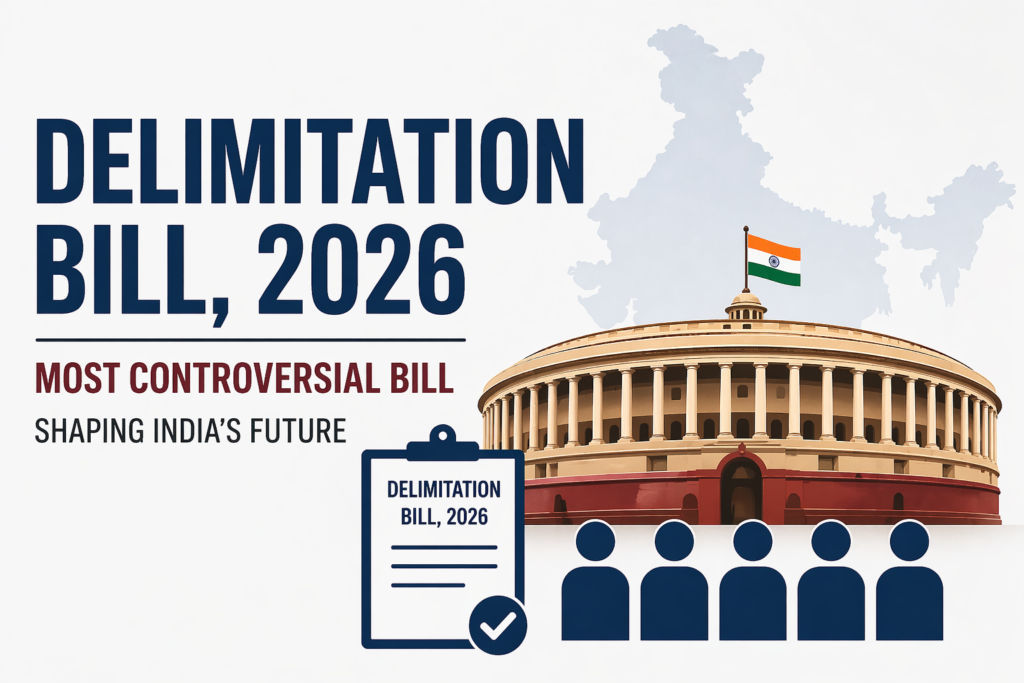
Introduction India is approaching an important turning point in its democratic structure. The proposed Delimitation Bill 2026 has started gaining attention among legal experts, policymakers, and the general public. While the term may sound technical, its impact is simple and direct. It decides how people are represented in Parliament and State Assemblies. In a country with vast population differences across regions, ensuring fair representation is not easy. This is why the upcoming delimitation exercise is expected to be one of the most significant political developments in recent years. What is Delimitation Delimitation is the process of redrawing the boundaries of electoral constituencies based on changes in population. The purpose is to ensure that each elected representative speaks for roughly the same number of people. In India, this process is carried out by a Delimitation Commission. It is an independent body, and its decisions cannot be challenged in court. This ensures neutrality and prevents political interference. Why Delimitation is Scheduled for 2026 The need for delimitation in 2026 comes from earlier constitutional decisions. In 1976, the government froze the allocation of seats in Parliament and State Assemblies. This was done to encourage states to control population growth without fearing loss of representation. Later, this freeze was extended until 2026. As a result, even though India’s population has changed significantly, the number of seats and their distribution have remained largely the same. Once this freeze ends, a fresh delimitation exercise becomes necessary to reflect current population realities. Key Features of the Delimitation Bill 2026 Although the final version of the bill is yet to be officially presented, several expected features are being discussed. First, there may be a redistribution of seats in the Lok Sabha. States with higher population growth could receive more seats. Second, constituency boundaries will be redrawn to ensure that each constituency has a similar population size. Third, there is a possibility that the total number of Lok Sabha seats may be increased to better represent India’s growing population. Fourth, reserved seats for Scheduled Castes and Scheduled Tribes may be adjusted according to updated data. The North and South Debate One of the most sensitive aspects of the 2026 delimitation is its regional impact. Northern states such as Uttar Pradesh and Bihar have experienced higher population growth. On the other hand, southern states such as Tamil Nadu and Kerala have successfully controlled their population. If representation is adjusted purely on the basis of population, northern states are likely to gain more seats. This could lead to southern states having relatively less influence in Parliament. This situation raises an important question. Should political representation depend only on population, or should governance and population control efforts also be considered Legal and Constitutional Questions The Delimitation Bill 2026 is likely to raise several legal debates. One issue is the balance between states in a federal structure. Any major shift in representation can affect how power is distributed. Another concern is whether such changes could be tested under the basic structure doctrine of the Constitution. If representation is altered drastically, it may invite judicial scrutiny. There is also a broader debate between equality and fairness. While equal representation is important, it must not lead to unintended disadvantages for certain regions. Political Impact The political consequences of delimitation will be significant. States gaining more seats will have greater influence in national decision making. This can change the overall balance of power in Parliament. Political parties will need to rethink their strategies as constituency boundaries change. Regional parties may either gain or lose importance depending on how the new constituencies are shaped. Possible Solutions To address concerns, several approaches can be considered. One option is to increase the total number of seats in the Lok Sabha so that no state loses its current representation. Another approach is to implement changes gradually instead of all at once. This can reduce political tension. There can also be discussions on creating a balanced model that considers both population and other factors such as development. Why It Matters Delimitation directly affects every citizen. It determines who represents you and how much weight your vote carries. In simple terms, it shapes the functioning of democracy. A fair delimitation process ensures that every vote has equal value. Conclusion The Delimitation Bill 2026 is more than just a technical reform. It is a major step that will shape the future of India’s democracy. It brings together questions of law, fairness, representation, and regional balance. The real challenge lies in carrying out this process in a way that is just, transparent, and acceptable to all parts of the country. The decisions made now will have long term effects on how India is governed and how its people are represented.
SURAJ LAMP & INDUSTRIES PVT. LTD. v. STATE OF HARYANA
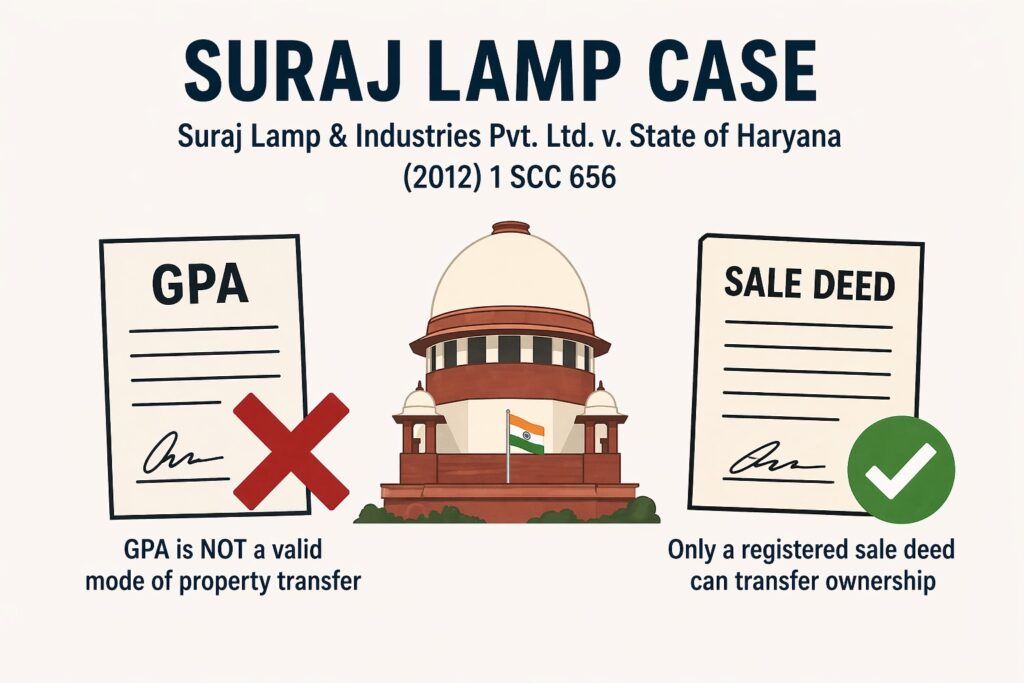
Citation: (2012) 1 SCC 656 Court: Supreme Court of India Date: 11 October 2011 Background: In many parts of India, property transfers were commonly carried out through Agreement to Sell, General Power of Attorney (GPA), and Will instead of registered sale deeds. These transactions were often used to avoid stamp duty and registration charges. The Supreme Court examined whether such GPA sales legally transfer ownership. Core Legal Issues: 1. Whether GPA transfers ownership.2. Whether an Agreement to Sell is equivalent to a sale.3. Whether SA/GPA/Will transactions constitute valid conveyance. Court’s Reasoning: • A General Power of Attorney only authorizes a person to act on behalf of the principal and does not transfer ownership.• An Agreement to Sell does not create any interest in immovable property under Section 54 of the Transfer of Property Act.• A Will operates only after the death of the testator and cannot substitute a sale deed.• Ownership in immovable property can be transferred only through a duly stamped and registered sale deed. Final Holding: The Supreme Court held that SA/GPA/Will transactions do not convey title nor create any interest in immovable property. Such transactions cannot be treated as completed sales. Clarifications by the Court: • Genuine GPA transactions for management purposes remain valid.• Earlier transactions already acted upon were not automatically invalidated.• Parties may still execute proper registered conveyance deeds to perfect title. Impact of the Judgment: • Ended the widespread GPA sale practice.• Strengthened the requirement of registered sale deeds.• Reduced property frauds.• Increased state revenue from stamp duty.• Brought greater transparency in real estate transactions.
Kesavananda Bharati v. State of Kerala (1973)
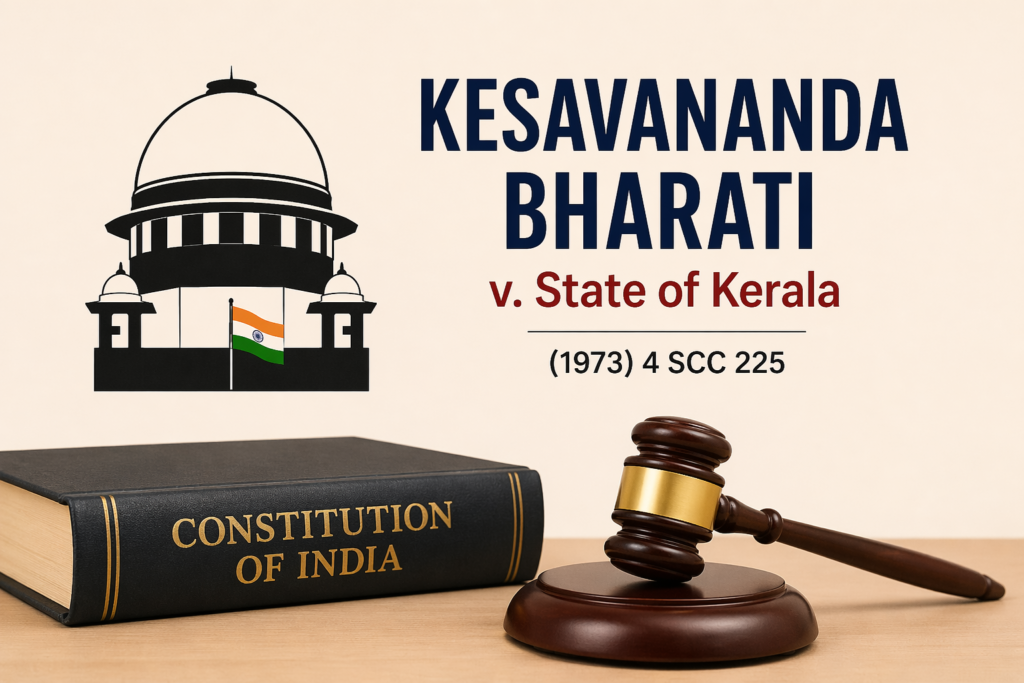
The Case That Defined the Indian Constitution Background The case was filed by Kesavananda Bharati, challenging Kerala’s land reform laws that affected property owned by religious institutions. At the same time, Parliament had introduced amendments to expand its power under Article 368, raising concerns about unlimited constitutional changes. Key Issue Can Parliament amend any part of the Constitution, including Fundamental Rights, without limitation? A 13-judge bench (7:6 majority) held: Basic Structure Doctrine Though not exhaustively defined, it includes: Significance The doctrine was later applied in cases like Minerva Mills v. Union of India. Conclusion The Kesavananda Bharati case ensures that while the Constitution can evolve, its core identity remains intact—making it a cornerstone of Indian democracy. Citation – Kesavananda Bharati v. State of Kerala, (1973) 4 SCC 225 (SC)
MARSHAL AGENCIES LTD. V P.M. DIESELS LTD

The Field Marshal Case This case before the Supreme Court involved the interpretation of Sections 46, 56, 107, and 111 of the Trade and Merchandise Marks Act, 1958, in relation to the alleged infringement of the registered trademark “FIELD MARSHAL”, owned by P.M. Diesels Ltd. Key Legal Provisions Issue Before the Court The primary issue was whether the rectification proceedings initiated by the Appellants against the Respondents were valid. The Appellants argued that the right to seek rectification lies with an aggrieved party and can be exercised based on the trial court’s findings. Supreme Court’s Ruling The Supreme Court ruled in favour of the Respondents, holding that: Clarification on Section 111 The Court clarified that Section 111 is intended to ensure that the issue of validity of registration is determined first by the appropriate forum. Once the rectification issue is resolved, the civil suit may proceed on the remaining issues.
India’s Rape Problem – Why do Rapist’s Rape – Why India is also called Rape Capital – How many are Fake Rape Cases

Introduction Sexual violence is one of the most disturbing issues facing modern societies, and India is no exception. Over the years, incidents of rape and sexual assault have sparked nationwide outrage, legal reforms, and intense debate. At the same time, India is often labeled—sometimes unfairly – as the “rape capital” of the world. But what is the truth behind these claims?Why do such crimes occur?And how significant is the issue of false rape cases? This article aims to present a balanced, fact-based, and legally informed perspective on these questions. Understanding the Legal Definition of Rape in India Under Section 375 of the Indian Penal Code (IPC), rape is broadly defined as sexual intercourse without consent, obtained through coercion, fear, deception, or when the victim is incapable of giving consent. The law has evolved significantly, especially after the 2012 Delhi gang rape case, leading to stricter punishments and broader definitions under the Criminal Law (Amendment) Act, 2013. Why Do Rapists Commit Rape? (Root Causes) There is no single reason behind sexual violence. It is a complex issue influenced by multiple factors: 1. Power and Control, Not Just Sexual Desire Rape is often about asserting dominance rather than sexual gratification. Many offenders seek control over the victim. 2. Patriarchal Mindset Deep-rooted gender inequality and societal norms that treat women as subordinate contribute significantly. 3. Lack of Sex Education Inadequate understanding of consent and healthy relationships leads to distorted perceptions about sexuality. 4. Cultural Silence and Victim-Blaming Victims are often blamed or shamed, which discourages reporting and indirectly empowers offenders. 5. Weak Enforcement and Delayed Justice Although laws are strict, delays in investigation and trial reduce deterrence. 6. Exposure to Violence and Toxic Influences Media, pornography (when misunderstood), and exposure to violence without proper guidance can influence behavior in some cases. Is India Really the “Rape Capital of the World”? The term “rape capital” is widely used in media, but it is misleading and lacks context. Reality Check: Why Does India Get This Label? 👉 Conclusion:India does have a serious problem with sexual violence, but the label “rape capital” is oversimplified and not statistically accurate. How Many Rape Cases Are False? (The Controversial Debate) This is one of the most misunderstood aspects. What Do Official Data Say? Important Clarifications: Cases may be labeled “false” due to: Actual Malicious False Cases 👉 Balanced View: Challenges in Addressing Rape in India 1. Underreporting Many victims still do not report due to fear, stigma, or lack of trust in the system. 2. Police and Investigation Issues Insensitive handling and procedural delays discourage victims. 3. Judicial Delays Cases can take years, reducing faith in justice. 4. Social Stigma Victims often face more scrutiny than perpetrators. What Needs to Change? 1. Stronger Implementation of Laws India has strict laws, but enforcement must improve. 2. Fast-Track Courts Speedy trials can increase deterrence. 3. Gender Sensitization Education on consent and respect must start early. 4. Police Reforms Better training and victim-friendly procedures. 5. Responsible Media Reporting Avoid sensationalism and respect privacy. 6. Balanced Legal Approach Protect victims while ensuring safeguards against misuse. Conclusion India’s rape problem is real, serious, and complex – but it cannot be reduced to simplistic labels or one-sided narratives. A meaningful solution lies in legal reform, social change, and collective responsibility. Only by addressing the issue holistically can society move toward safety, justice, and dignity for all.